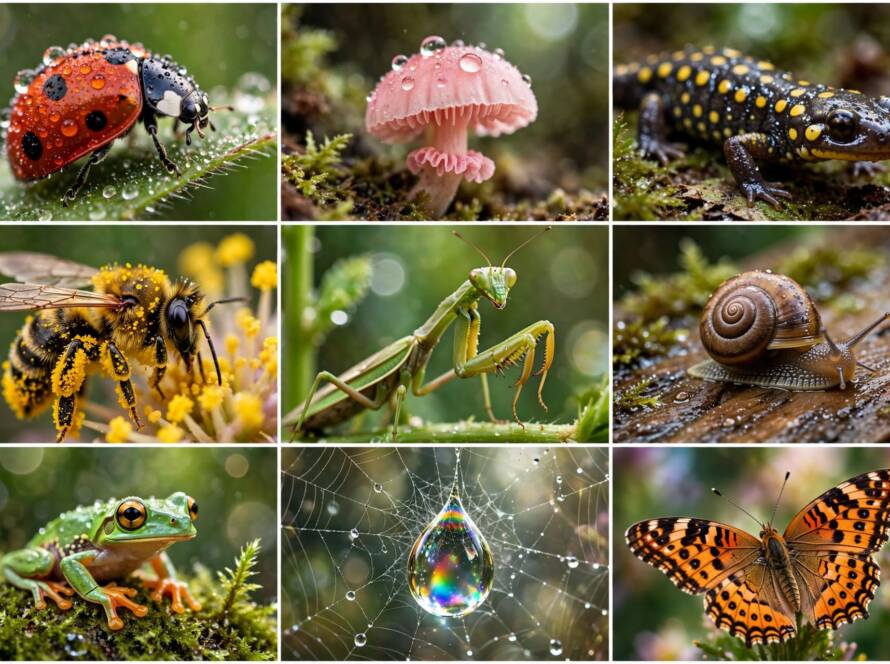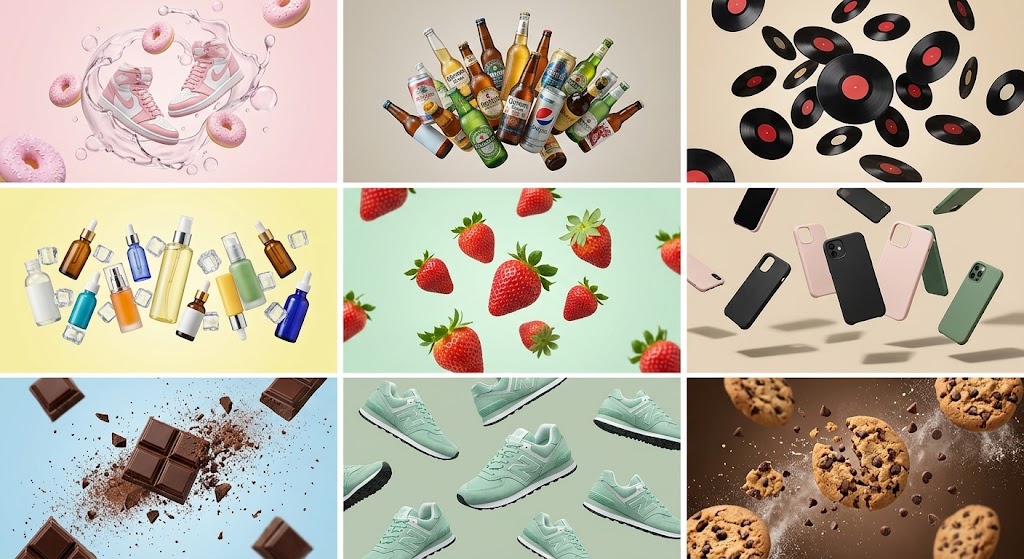
Prompt
o Structure: Explicitly define the 3x3 grid and nine panels.
o Style: Reiterate the clean commercial product photography, minimalist backgrounds with color gradients, and the key floating/scattered object physics. Add details about lighting (soft but precise).
o Content: List each panel with its unique theme, color, and object cluster. For example: "Panel 1 (Sage Green): A cluster of custom artisan mechanical keyboard keycaps and switches, with intricate designs, floating in a soft, green, misty cloud."
o Composition: Describe the overall layout as a clean, rigid grid. Include minor environmental elements like mist, light dust, or crumbs where appropriate (mist for perfume, crumbs for gelato).
o Final Touches: Make sure the text is clear and direct for the model to generate the specific layout and contents. Re-read to ensure all categories are unique and faddish, avoiding overlaps with the original (e.g., no sneakers, no cookies, no craft beer, no simple fruit, etc.). Use descriptive words for textures. Add a generic watermark to complete the look. The original had no prominent grid dividers within the panels, but the entire thing is a 3x3 grid, which is key. I'll ask for a grid with thin white dividers for clarity of structure. The text labels are on the labels of the bottles in the original, but not on the grid itself. Let's make the objects textless for a cleaner look.
2. Construct the final prompt: Build the text description systematically, ensuring each cell is distinct and detailed. Add the watermark detail. Request a full-frame 3x3 grid with thin, white dividing lines. Add specific lighting details.
3. Refine again: Ensure the objects are textless to avoid bad text generation. Use evocative terms like "tessellated," "torrent," and "misty." Make sure the product categories are highly faddish (custom keycaps, D20s, drones). Recheck the original for all elements, like the donuts, chocolate chunks, and fruit. I'll make sure each panel has its own minor detail: keycaps with small tool parts, perfume with flower petals, retro games with pixel art blocks, candy with small sugar crystals, succulents with pebbles, watch straps with gear parts, gelato with a few nuts, dice with dust, and drones with a few screws. This replicates the detail level of the original.
4. Final Prompt Assembly: Start with the grid description. Then detail each panel one by one, top-left to bottom-right. Specify the background color first for each panel. Then describe the main objects and minor floating details. Add lighting. Specify no text on products. Add grid dividers. Add a watermark.
5. Re-read the plan. Looks solid. Creates a 3x3 grid with new, faddish, and creative categories while maintaining the floating product photography style.
Final Polish: The prompt is detailed, specific, and directly replicates the visual language of the original while changing the content to be entirely new. The grid is clearly defined. Each cell has its own unique theme, background, and object cluster. Lighting and minor details are included.